Release Time:2018-02-23
Turkey recorded its best year to date for levels of solar PV installations, adding 1.79 GW of capacity in 2017. On the back of this, pv magazine takes a look at the most active players in the Turkish PV module market.
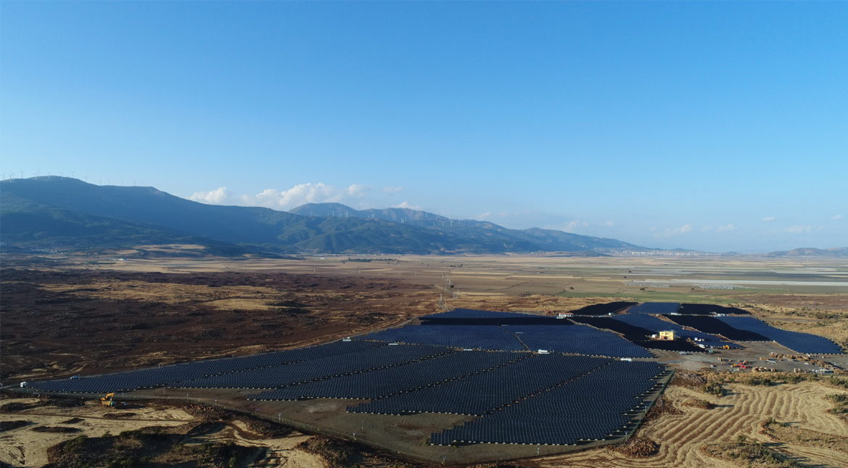
A solar plant built by Wagner Solar close to Gaziantep, southern Turkey.
Image: Wagner Solar
Who is leading the Turkish solar PV module market? pv magazine discussed this question with Egemen Seymen, CEO of Endepo Global, a Turkish importer and distributor of PV equipment, and also a shareholder of the Turkey-based CSUN PV assembly plant, which has an annual 150 MW capacity for solar cells and 500 MW for solar modules.
According to information provided by Seymen, and presented in a graph (below), U.S. thin film PV manufacturer, First Solar, Chinese manufacturer, Jinko Solar and Korea’s Hanwha Q Cells sold the biggest amount of modules in the market.
It should be noted, however, that the data provided by Seymen should be read as an approximation and a trend of the sales only. Radu Roman, for instance, product and business development manager for Jinko Solar in Europe, told pv magazine that Jinko Solar shipped 403.72 MW of their modules to Turkey in 2017.

Top solar PV module suppliers to Turkey in 2017 according to Seymen. Image: pv magazine/Harald Schütt
Image: pv magazine/Harald Schütt
Endepo sales, meanwhile, comprised modules for CSUN (100 MW), Recom (40 MW), Talesun (10 MW); and 20 MW of modules made by other manufacturers, including HT Saae, Axitec, Solarfabrik and Lucent.
The rationale for investors developing solar PV plants in Turkey is to use Chinese modules and lower the levelized cost of energy (LCOE) for solar.
However, starting in 2017, the Turkish Government imposed an antidumping fee on China-based PV manufacturers. Further to the antidumping fee, Turkey has also introduced an import tax (g?zetim vergisi) for all imported PV modules.
“The antidumping fee has not affected the market so much,” said Seymen, “because investors imported modules from Vietnam and Thailand with similar prices. But importing solar modules became very difficult because of high VAT on customs. VAT amount is almost double for imported solar modules.”
A solution to the high import tax, says Seymen, is to buy from local manufacturers. However, he said that “quality and bankability issues arise when choosing this option.”
Common approach
Seymen refers to a common approach employed by some international PV module manufacturers, which import raw materials from China, Taiwan or elsewhere, and use equipment and labor from local manufacturers to assemble the modules.
In that case, local firms will operate as OEMs and resell foreign manufacturers’ products under their own, Turkish name and branding. Trina Solar and Talesun, for example, often do this in Turkey, said Seymen.
Ates Ugurel, founder of Turkey’s Solarbaba, a non profit company, which focuses on the promotion of clean technology with a particular interest in solar, told pv magazine, that there are two particular issues with this approach.
Firstly, investors do not easily trust the quality of the products, as they have no reference from the field. Secondly, the modules assembled in Turkey are still more expensive than the imported ones.
The March edition of pv magazine will include an update on the solar PV market in Turkey.
Talesun’s New Generation MBB Module Be Honored with Certifications from Both TüV SüD and TüV Rheinland
2018.12.07Made in Turkey, not so easy
2018.06.19Keys to half-cut cells
2018.05.17Rejuvenating of Korea’s PV market with the renewable energy plan led by the Moon government
2018.03.21Half cell, full value
2018.03.13China’s shipment shuffle
2018.02.14